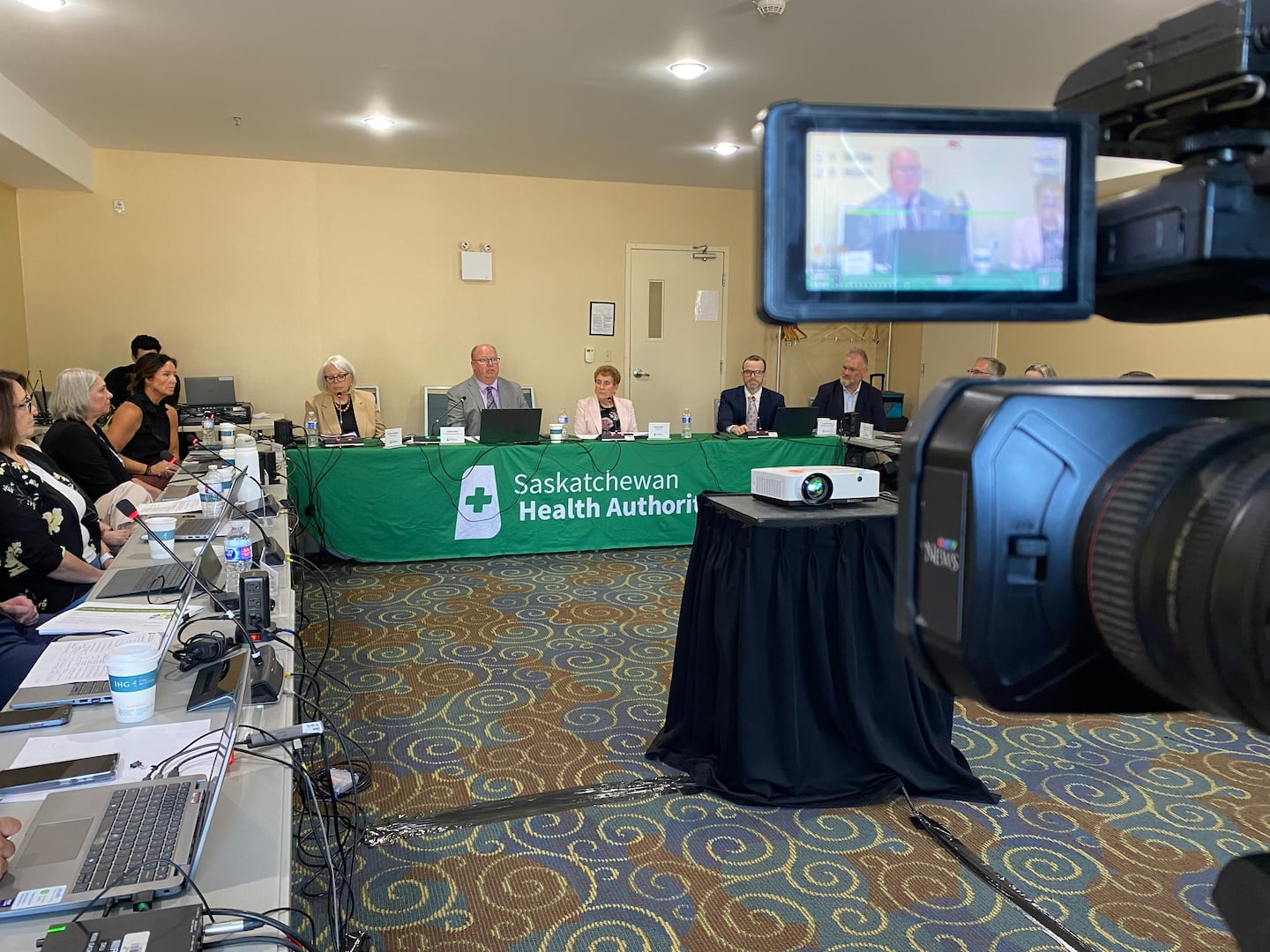
The Saskatchewan Health Authority (SHA) has approved its 2026-27 budget, focusing on expanding access to care and strengthening services across the province. The plan includes $5.5 billion in operating expenses, a 5.05 per cent increase compared to the previous budget. The SHA said the investments are designed to ensure healthcare workers have the capacity and resources needed to deliver high quality care throughout Saskatchewan. According to SHA CEO Andrew Will, expanding team-based primary care remains a top priority. “What we’re very excited about is the expansion of primary care, integrated team-based care to reach our goal, where every Saskatchewan person will have access to a primary care team by 2028,” Will told CTV News in Yorkton, after the SHA’s public board meeting on Wednesday. A key focus of the 2026-27 budget is expanding care closer to home. That includes building capacity in hospitals and intensive care units, modernizing diagnostic services, improving access to surgeries, and enhancing emergency medical response. “This budget is aligned with the Government of Saskatchewan’s Patients First Healthcare plan, which sets a clear direction, one focused on primary access, better outcomes and a more connected, patient-centered system,” Will said in his public remarks. He said recruitment and retention of healthcare workers were also considered. “We are also focused on strengthening recruitment, retention and training, including $24.2 million for the Saskatoon City Hospital acute care expansion, and $14.6 million for additional capacity at Royal University Hospital and $4.9 million to add in-patient beds at St. Paul’s Hospital,” he said. The SHA is also investing in urgent and specialized care, with $9.9 million earmarked for the Saskatoon Urgent Care Centre, $2.5 million for the neonatal intensive care unit at Regina General Hospital, and $5.7 million to increase diagnostic imaging volumes across the province. Mental health and addiction services are another focus, with $9.4 million dedicated to expanding supports and $2.56 million set aside to enhance continuing care. The SHA says it is working toward adding more addiction treatment spaces in the coming years. In response to questions, SHA Chief Operating Officer Derek Miller said the goal is to expand addiction treatment capacity using the allocated $9.4 million. “We had about 500 beds within Saskatchewan for addictions treatment, and so the action plan is adding an additional 500 beds [by 2028],” Miller said. He also noted recent efforts to expand virtual access to addiction medicine services in northern communities. “We’ve also established a navigation service to support the coordination of patients that might be waiting for admission into residential treatment programs,” Miller added. An additional $596.7 million has been allocated for capital projects to support equipment upgrades and facility improvements. Major capital projects will continue, including the Prince Albert Victoria Hospital expansion and new long term care developments in several communities, including Regina, Grenfell, and La Ronge. While SHA senior leadership expressed excitement about a new healthcare facility in Yorkton, they were not able to provide a timeline for the long-awaited project. “We’re very appreciative of the support that we have from city council here in Yorkton, as well as [The Health Foundation of East Central Saskatchewan] in fundraising for the 10 per cent local share of that project, but also [for] the furnishings, fixtures and equipment that will be required to open the new facility,” Will told CTV News. The SHA said the overall goal of its new budget is to improve access, reduce pressure on the health system, and make it easier for patients to move through care.
|